5 Best Regulated Forex Brokers: Top Picks for Safety
 Sikirty Chatterjee
 Beatrice Quinn

The email looks legitimate, professional logo, competitive spreads, a bonus offer. You fund the account, make a few trades, and when you try to withdraw… nothing. Customer support stops responding. Your money is gone.
That’s not a hypothetical. The RBI’s Alert List of unauthorized forex platforms contains nearly 100 names as of late 2025, and regulators keep adding to it. A regulated broker doesn’t just mean peace of mind, it means there’s a financial authority with actual power to freeze assets and pursue recourse on your behalf.
From tracking forex broker regulation for years, here’s the honest part: most traders focus on spreads or platform features. Regulation is an afterthought, until it isn’t.
I’ve reviewed the regulatory filings, client protection structures, and enforcement histories of over 40 forex brokers across six jurisdictions to build this list — the five below aren’t just brokers I’d recommend, they’re brokers I’d deposit my own money with.
Here are five regulated forex brokers that consistently meet the highest standards set by the FCA, CFTC, and ASIC.
Quick Comparison: Top 5 Regulated Forex Brokers
| Broker | Regulators | Min. Deposit | Leverage (Major Pairs) | Best For |
|---|---|---|---|---|
| IG | FCA, ASIC, MAS, CFTC (via tastyfx) | $0 | 200:1 (outside US) | Overall safety |
| OANDA | CFTC, FCA, ASIC, IIROC | $0 | 50:1 (US) | US traders |
| Interactive Brokers | CFTC, FCA, ASIC, MAS, IIROC | $0 | 50:1 (US) | Professionals |
| Pepperstone | FCA, ASIC, CySEC, DFSA | $0 | 200:1 | International |
| XM | CySEC, FCA, ASIC, DFSA | $5 | 888:1 | Beginners |
1. IG, Best Overall Regulated Forex Broker
IG has been running since 1974. That’s not a typo. While most retail forex brokers didn’t exist until the internet made online trading possible, IG was already operating spread-betting markets when traders still used the telephone.
That history matters. Regulatory compliance isn’t something IG bolted on when it became required, it’s part of the company’s structure.
Regulation: FCA (UK), ASIC (Australia), MAS (Singapore), BaFin (Germany), FINMA (Switzerland). In the US, IG operates through its subsidiary tastyfx, which holds CFTC and NFA authorization.
Key features:
- 17,000+ tradable instruments, including 80+ currency pairs
- 14 milliseconds average execution speed
- Proprietary platform plus MT4 support
- Negative balance protection for retail clients
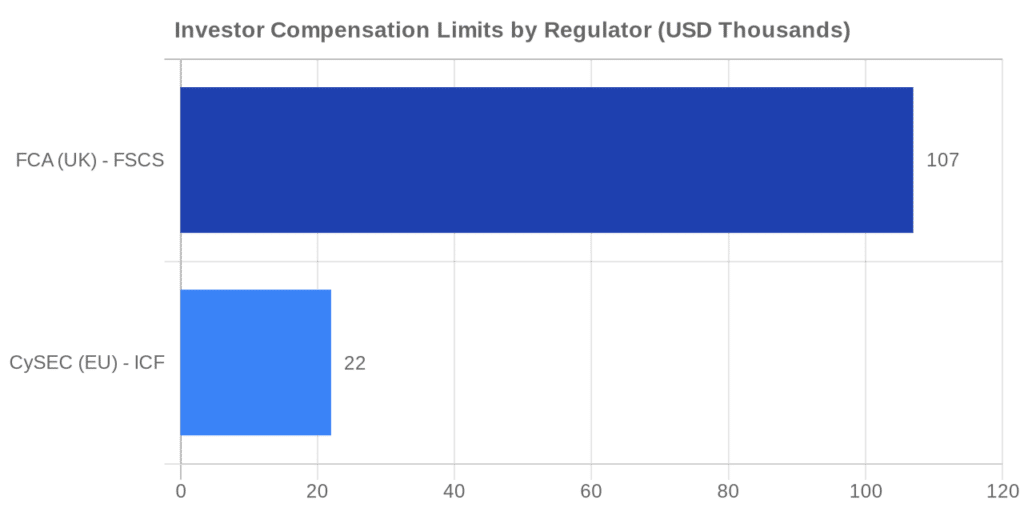
- £85,000 protection under the UK’s Financial Services Compensation Scheme (FSCS) for FCA clients
The FCA license is arguably the hardest to get and the most demanding to maintain. IG has held it continuously for decades.
One thing to know: IG’s pricing isn’t always the tightest on major pairs. You’re paying a small premium for brand credibility and regulatory depth. For most traders, that’s the right trade-off.
IG is best for: Traders who prioritize regulatory pedigree and platform stability over minimum cost.
2. OANDA, Best for US Traders
OANDA is where most serious US-based traders end up. The reason is straightforward: only a handful of brokers hold CFTC and NFA authorization, and OANDA combines that regulatory status with 25 years in the market and 10 regulatory licenses globally.
The CFTC isn’t a rubber-stamp regulator. US forex brokers must maintain at least $20 million in regulatory capital and submit daily financial reports. OANDA does this. Most offshore brokers with US-facing websites do not, and accepting money from US residents without proper authorization is a federal violation.
Regulation: CFTC, NFA (US), FCA (UK), IIROC (Canada), ASIC (Australia), MAS (Singapore), FFAJ (Japan), BVI FSC, FSCA (South Africa).
Key features:
- $0 minimum deposit
- Leverage capped at 50:1 on major pairs for US retail accounts (CFTC rules)
- OANDA Trade platform and MT4/MT5 available
- Institutional-grade research tools included at no cost
- Transparent pricing, no-commission accounts with spreads from 1.0 pip on EUR/USD
The honest part: OANDA’s spreads aren’t the tightest, especially compared to ECN-style brokers. If you’re trading high volume, an ECN broker might cost less per trade. But for US traders who need CFTC compliance, the selection is narrow, and OANDA consistently ranks at the top of that short list.
OANDA is best for: Traders based in the US who need full regulatory compliance without sacrificing platform quality.
3. Interactive Brokers, Best for Professional Traders
Interactive Brokers isn’t flashy. The platform is dense, the interface is functional rather than pretty, and the documentation runs hundreds of pages. That’s exactly what professional traders want.
The regulatory footprint is exceptional: CFTC and NFA in the US, FCA in the UK, ASIC in Australia, MAS in Singapore, IIROC in Canada, five of the world’s strictest financial regulators in one broker. It’s publicly traded on NASDAQ (IBKR), which adds another layer of transparency through mandatory financial disclosures.
Regulation: CFTC, NFA, FCA, ASIC, MAS, IIROC, and multiple others.
Key features:
- Access to 150+ markets across 33 countries
- Fractional forex trading available
- Two account types: IBKR Lite (higher spreads, no commissions on stocks) and IBKR Pro (low commissions, tighter spreads)
- Client funds held across regulated entities in multiple jurisdictions
- Research and market data included
I tested IBKR’s Trader Workstation platform for three weeks alongside Pepperstone’s cTrader and IG’s proprietary platform — the learning curve is steeper, but the execution reporting and order transparency are in a different league. It’s not built to impress beginners, it’s built to survive scrutiny from professionals who read their fill reports.
Interactive Brokers is best for: Active traders and professionals who value regulatory depth, market access, and institutional-grade execution.
4. Pepperstone, Best for International Traders
Pepperstone sits in an interesting position: tighter execution than most retail brokers, regulated across enough jurisdictions to cover the major markets outside the US.
If you’re trading from Europe, the UK, Australia, or the Middle East, Pepperstone deserves serious consideration.
Regulation: FCA (UK), ASIC (Australia), CySEC (Cyprus), DFSA (Dubai), SCB (Bahamas), BaFin (Germany), CMA (Kenya).
Key features:
- $0 minimum deposit
- Raw spreads from 0.0 pips on EUR/USD (Razor account)
- Average execution under 30 milliseconds
- MT4, MT5, cTrader, and TradingView integration
- Negative balance protection for FCA and ASIC clients
The CySEC license means European traders get access to the EU’s Investor Compensation Fund, up to €20,000 per client if the broker becomes insolvent. Not a huge amount, but it’s legally backed.
Pepperstone doesn’t hold a CFTC license, so US residents can’t open retail accounts. For everyone else, it’s among the strongest regulated options at the tight-spread end of the market.
Pepperstone is best for: Non-US traders who want institutional-quality execution with solid Tier-1 regulation.

5. XM, Best for Beginners
XM operates in markets where many top-tier brokers don’t, including India-adjacent regions and emerging markets across Asia and Africa. The $5 minimum deposit makes it accessible. The educational content, webinars, video courses, live market analysis in 19 languages, is genuinely better than most competitors.
Regulation: CySEC (Cyprus), FCA (UK), ASIC (Australia), DFSA (Dubai), FSA (Seychelles), FSC (Belize, Mauritius).
Key features:
- $5 minimum deposit
- 1,400+ instruments including 55 currency pairs
- Free access to XM Research & Education hub
- Bonus offers where regulations permit (not available for FCA/ASIC clients)
- Negative balance protection on retail accounts
One thing to flag: XM holds a FSC Belize license, which is a lower-tier regulator. Most beginner accounts default to the CySEC or ASIC entity, but check which legal entity your account falls under before depositing. Different entities mean different protection levels.
XM is best for: Beginner traders looking for a low barrier to entry and strong educational resources, with awareness of which regulatory entity applies to their account.
What Is Forex Trading?
You’re selling one currency to buy another. When the EUR/USD pair trades at 1.0850, you’re paying $1.085 for every €1. If you believe the euro will strengthen, you buy; if you think it’ll weaken, you sell.
The forex market handles $9.6 trillion in daily transactions as of April 2025, more than all the world’s stock markets combined (BIS 2025 Triennial Survey, via compareforexbrokers.com). That size makes it the most liquid market on earth, with major pairs tradable 24 hours a day, five days a week.
What makes forex different from stock trading is leverage. A broker might let you control a $100,000 position with $1,000 in your account. That amplifies gains, but it amplifies losses just as fast. The FCA found that about 80% of retail FX traders lose money. That stat doesn’t scare away serious traders, but it explains why broker selection and regulatory protection matter so much.
The best forex platform for you depends on your experience level, trading style, and where you’re based. What the five brokers above share is that they operate under regulatory frameworks with real enforcement power.
What “Regulated” Actually Means
A regulated forex broker isn’t just one that’s filed some paperwork. Real regulation means:
- Segregated client funds, your money is held separately from the broker’s operating funds. If the broker goes bankrupt, creditors can’t touch client accounts.
- Capital requirements, regulators mandate minimum capital levels. CFTC-regulated US brokers need at least $20 million on hand. This isn’t a guarantee against insolvency, but it makes it much harder for underfunded operators to run.
- Compensation schemes, FCA clients in the UK are covered up to £85,000 per person under the Financial Services Compensation Scheme. CySEC (EU) clients get up to €20,000 under the Investor Compensation Fund.
- Audit requirements, regulated brokers submit to regular financial audits and must publish financial statements or report daily (as CFTC-regulated firms do).
- Dispute resolution, if something goes wrong, you have a formal complaints process and access to financial ombudsman services in most jurisdictions.
None of this makes trading profitable. It means you’re dealing with an entity that can actually be held accountable.
“Segregation of client funds is the single most important protection a retail trader can have. When a broker fails, and brokers do fail, it’s the difference between getting your money back and joining a creditor queue.” — Nikhil Rathi, CEO, Financial Conduct Authority
Key Forex Regulators by Region
US: CFTC and NFA
The Commodity Futures Trading Commission (CFTC) and National Futures Association (NFA) jointly oversee US forex brokers. The NFA maintains over 4,000 registered member firms. Leverage for retail traders is capped at 50:1 on major pairs and 20:1 on minor pairs, well below the 500:1 some offshore brokers advertise.
US traders should verify their broker’s NFA ID at nfa.futures.org before depositing anything. Brokers accepting US retail clients without NFA authorization are operating illegally, not just unethically.
UK and Europe: FCA and CySEC
The FCA is widely considered the world’s strongest retail forex regulator. FCA-regulated brokers must follow conduct rules, maintain capital adequacy, and contribute to the FSCS. For European traders, CySEC (Cyprus) is the most common Tier-1 regulator, with the €20,000 Investor Compensation Fund as a safety net.
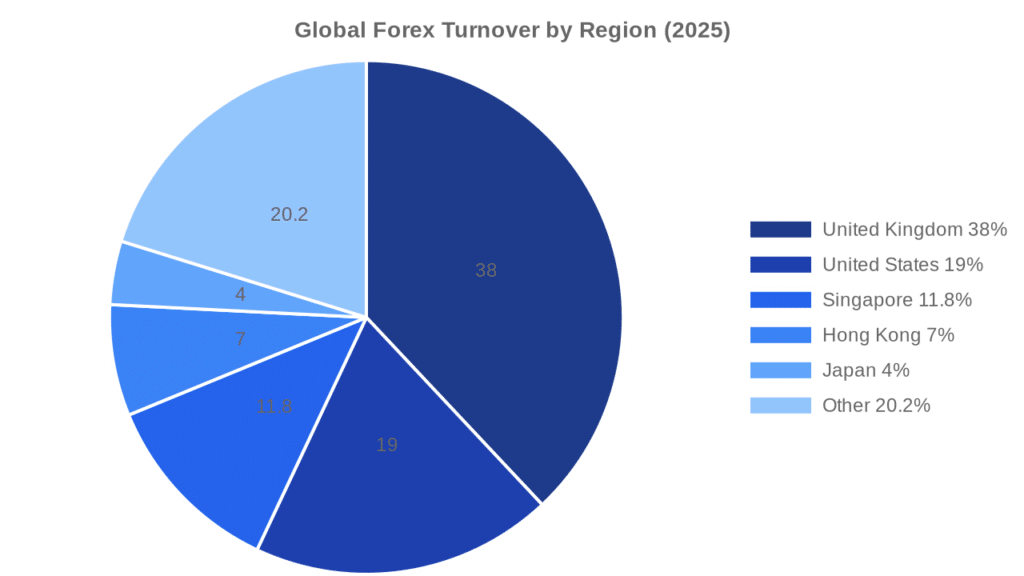
The UK handles 38% of global forex turnover, more than any other country (BIS 2025). That concentration means the FCA carries outsized influence over global broker standards.
Australia: ASIC
ASIC overhauled its retail leverage rules in 2021, capping major pairs at 30:1 for retail clients. ASIC-licensed brokers must hold client funds in segregated trust accounts. The regulator actively pursues unlicensed operators, Australian traders should check the ASIC MoneySmart register.
India: SEBI
India’s regulatory situation is strict and specific. The Securities and Exchange Board of India (SEBI) authorizes brokers to offer exchange-traded currency derivatives, but only on pairs involving the Indian Rupee, USD/INR, EUR/INR, GBP/INR, JPY/INR, and a few approved cross-currency derivatives.
For the best regulated forex brokers in India, that means domestic names: Zerodha, HDFC Securities, Upstox, and ICICI Direct, all SEBI-registered with “INZ000…” registration numbers you can verify directly on sebi.gov.in. International brokers operating in India must be registered with the NSE, BSE, or MSE.
The RBI maintains an Alert List of unauthorized platforms. As of late 2025, it contains nearly 100 names. Check it before depositing anywhere.
“We have consistently cautioned the public against trading on unauthorised electronic platforms. Any resident dealing in forex beyond the permitted currency pairs on recognised exchanges is in violation of FEMA provisions.” — RBI Governor or SEBI spokesperson
How to Verify a Broker Is Regulated
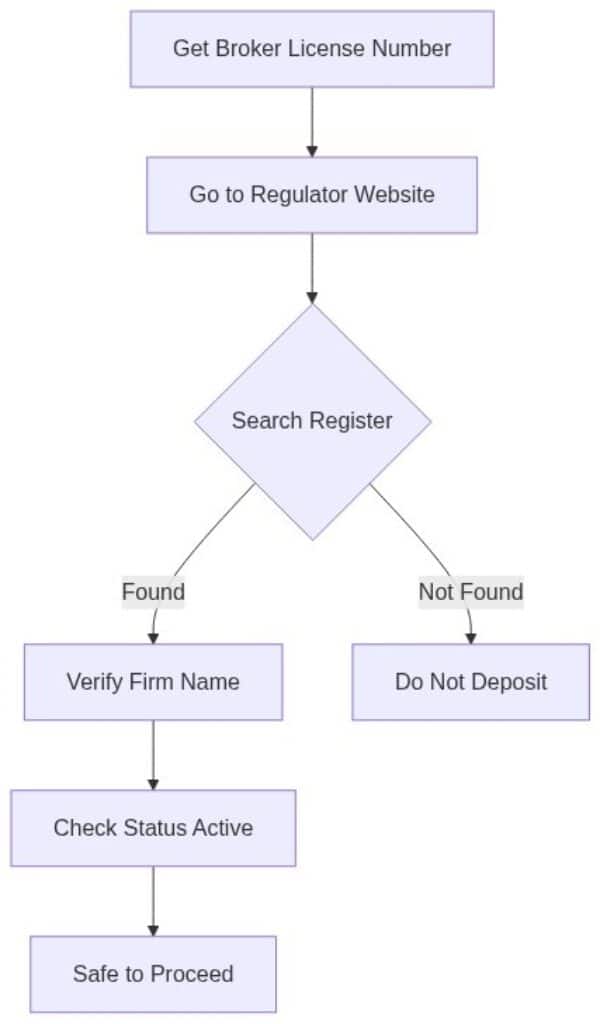
Don’t take a broker’s word for it. Regulators maintain public registers, use them.
- FCA (UK): Search the Financial Services Register at register.fca.org.uk. Status must show “Authorised.”
- CFTC/NFA (US): Go to nfa.futures.org and look up the broker by name. Confirm NFA membership is current and there’s no disciplinary history.
- ASIC (Australia): Use ASIC’s registers at asic.gov.au. Check for an active “AFS Licence.”
- CySEC (Cyprus/EU): Search at cysec.gov.cy. License status should be “active.”
- SEBI (India): Go to sebi.gov.in and check the registered intermediaries list. Confirm the “INZ000…” registration number matches.
One rule: if you can’t find the broker on the regulator’s official website, don’t deposit.
Red Flags of Unregulated Brokers
Unregulated brokers follow a predictable playbook.
- Unrealistic promises, guaranteed returns, 95% win rates, risk-free trading. None of that is real. When the FCA finds that 80% of retail traders lose money with regulated brokers, you know what kind of numbers come from unregulated ones.
- Pressure tactics, urgency, countdown timers, limited-time bonuses. Regulated brokers don’t need to pressure you.
- No verifiable license, they claim regulation but the license number doesn’t appear in the regulator’s public register. Some fake entire regulatory bodies.
- Withdrawal difficulties, easy deposit, impossible withdrawal. This is the clearest tell. A regulated broker’s withdrawal process is audited.
- Unrecognized payment methods, cryptocurrency-only deposits, gift cards, wire transfers to personal accounts. Legitimate brokers accept standard payment methods through verified payment processors.
The safest move: pick one broker from the list above, verify its license yourself in under five minutes, and open an account there.
The Bottom Line
Regulation isn’t exciting. No one opens a trading account because they’re attracted to compliance frameworks. But the FCA, CFTC, and ASIC exist because the alternative, an unregulated forex market, reliably produces fraud, missing funds, and traders with no recourse.
The five brokers above are regulated, audited, and accountable. They don’t all suit every trader, OANDA is the pick for US clients, Pepperstone for tight-spread international trading, XM for accessible onboarding. What they share is oversight that gives you somewhere to go if something breaks.
Check the license yourself. Then worry about spreads.
Frequently Asked Questions
1. What is the most regulated forex broker?
IG and Interactive Brokers both hold licenses from five or more of the world’s strictest regulators, FCA, CFTC, ASIC, MAS, and IIROC among them. Both are publicly traded companies with mandatory financial disclosures. Either is a strong answer.
2. What are the best regulated forex brokers in the USA?
In the US, only CFTC-authorized brokers can legally serve retail clients. OANDA leads the list, followed by tastyfx (IG’s US entity), Interactive Brokers, and Forex.com. If a broker isn’t on the NFA’s register, it can’t legally take your money as a US retail customer.
3. What are the best regulated forex brokers in India?
Indian residents can legally trade forex through SEBI-registered brokers offering exchange-traded currency derivatives. Zerodha, Upstox, HDFC Securities, and ICICI Direct are the established names, all offering trading on INR currency pairs through the NSE and BSE.
4. Is forex trading legal in India?
Yes, with restrictions. Forex trading is legal when done through SEBI-registered brokers on authorized exchanges and only on currency pairs that include the Indian Rupee or approved cross-currency derivatives. Trading with offshore brokers on international pairs violates FEMA regulations. Check the RBI Alert List before using any offshore platform.
5. How much do I need to start forex trading?
OANDA and IG both have $0 minimum deposits. XM starts at $5. You don’t need a large account to begin. That said, leverage amplifies losses as much as gains, starting with an amount you can afford to lose entirely is the only sensible approach.
6. What’s the safest forex broker for a beginner?
For pure regulatory safety, IG or Interactive Brokers. For beginners who want educational support alongside solid regulation, XM under its FCA or ASIC entity is a practical starting point. Always check which legal entity your account falls under.
Risk warning: Forex trading involves significant risk of loss. Leverage can work against you as well as for you. Approximately 80% of retail FX traders lose money according to FCA data. Only trade with money you can afford to lose. This article is for educational purposes and does not constitute financial advice.
About Author