
5 Best Brokers for News Trading in 2026
 Sikirty Chatterjee
 Alexandra Winters

NFP drops in 30 seconds. You’re positioned, order queued, watching the spread. Then it widens, 4 pips, 8 pips, and by the time your order fills, the move is half finished. That’s not bad luck. That’s a broker problem.
News trading magnifies every flaw in execution infrastructure. Latency that’s invisible at 8am becomes expensive at 1:30pm EST when the Fed speaks. Spreads that look competitive in quiet conditions widen sharply during high-impact releases. I’ve reviewed dozens of platforms for PipPenguin’s broker coverage, and what separates the brokers on this list from the rest isn’t just headline spread figures, it’s how they behave when markets get genuinely volatile.
Broker Comparison at a Glance
| Broker | Account | EUR/USD Spread | Commission (round-trip) | Min. Deposit | Key Regulator |
|---|---|---|---|---|---|
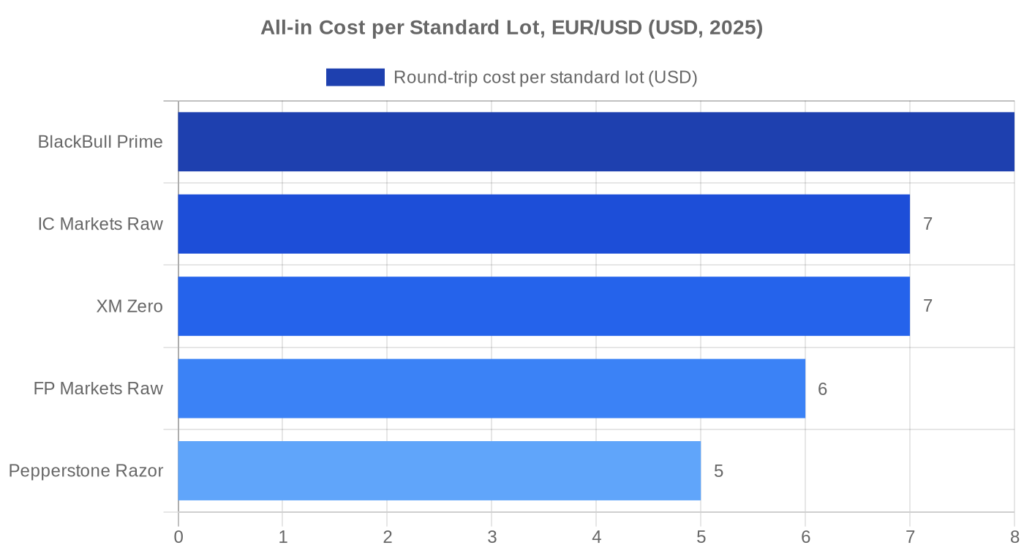
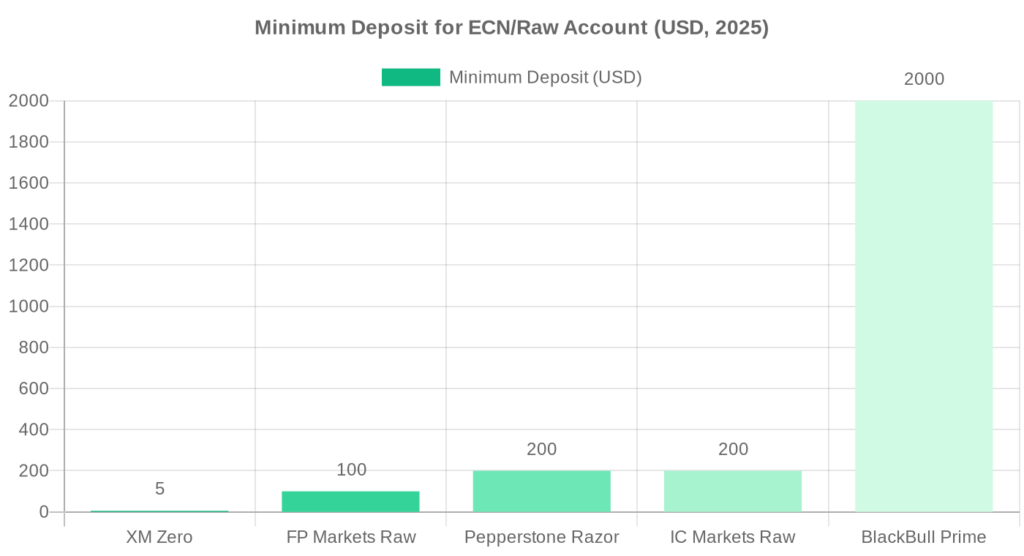
| Pepperstone | Razor ECN | 0.0 pips avg | ~$5.00/lot | $200 | FCA, ASIC |
| IC Markets | Raw Spread | 0.02 pips avg | $7.00/lot | $200 | ASIC |
| XM | Zero ECN | 0.0 pips | $7.00/lot | $100 | CySEC, ASIC |
| FP Markets | ECN Raw | 0.0 pips avg | $6.00/lot | $100 | ASIC |
| BlackBull | Prime | 0.0 pips | $6.00/lot | $0 | FMA |
Why Broker Selection Matters More for News Trading
Most retail forex trades happen in orderly conditions. News events are different. In the seconds around a major release, NFP, CPI, Fed rate decisions, liquidity fragments, spreads widen, and execution quality diverges sharply between brokers.
- Execution model: Pure ECN or STP with no dealing desk involvement during news events is non-negotiable. A market maker that takes the other side of trades has a financial interest in your losses during volatile conditions. That’s a structural conflict, not a criticism, it’s just how the model works.
- Spread behaviour at release: Fixed spreads sound safe until you read the fine print. Most fixed-spread accounts pause execution or switch to variable during high-impact news. Variable spreads that widen and recover quickly are preferable when the underlying ECN model is solid.
- Latency infrastructure: Sub-50ms server execution is the benchmark for news trading. Pepperstone publishes its execution statistics on its website, a transparency standard most competitors don’t bother matching. Server location matters too: NY4 and LD4 data centres place broker infrastructure next to institutional liquidity pools, which reduces fill times on market orders.
- Account type: Raw-spread or ECN accounts carry a commission-per-lot structure. For active news traders, this typically beats zero-commission accounts with spread markups baked in. The math depends on your trade frequency.

The 5 Best Brokers for News Trading
1. Pepperstone, Best Overall
Pepperstone is the default recommendation for most news traders. The balance of execution quality, regulatory standing, and infrastructure transparency makes it the lowest-risk starting point, and I don’t say that lightly given how crowded the “best execution” claims are in this industry.
The Razor account (ECN) sources liquidity directly from Tier-1 banks and processes orders with an average server execution time published at under 30ms. EUR/USD raw spreads average 0.0 pips with commissions of AUD$7 per round-turn lot (approximately $4.50–$5.00 in USD terms at current rates). Mid-range on cost, but Pepperstone’s published execution data is independently verifiable in a way most competitors’ claims aren’t.
Regulated by the FCA (UK), ASIC (Australia), DFSA (Dubai), BaFin (Germany), and CMA (Kenya). UK and EU traders access the same infrastructure as offshore clients under Pepperstone’s multi-entity structure. You can verify the FCA registration at register.fca.org.uk under reference number 684312.
Where it falls short: the Razor ECN account requires a $200 minimum deposit. Standard account performance during extreme volatility is more variable, for news trading specifically, the Razor account isn’t optional.
2. IC Markets, Best for Cost-Focused Traders
IC Markets consistently records some of the tightest raw spreads in retail forex. EUR/USD averages 0.02 pips on the Raw Spread account (IC Markets published data, 2024), with commissions of $3.50 per side per lot ($7.00 round-trip). That all-in cost is competitive with the best institutional offerings accessible to retail traders.
The math for a typical news trade: catching a 20-pip move on one standard lot generates $200 gross profit. Paying $7.00 round-trip commission is a 3.5% overhead. Run the same trade on a zero-commission account with 1.2-pip spreads and you’ve paid $12.00 in spread cost, nearly double. The commission model wins for active traders.
Execution routes through NY4 (New York) and LD4 (London) data centres. The honest part: colocating in the same infrastructure as institutional participants doesn’t guarantee identical fills, but it does put retail orders on faster footing than brokers routing through regional servers.
ASIC-regulated under licence number 335692 (verifiable at moneysmart.gov.au or asic.gov.au). The ASIC entity carries segregated funds, AFCA dispute resolution access, and negative balance protection, stronger protections than the offshore entities IC Markets also operates.
3. XM, Best for Building News Trading Skills
XM reports executing 99% of market orders in under one second across all account types (XM published statistics, 2024). That’s not the fastest execution benchmark on this list, but it reflects genuine investment in infrastructure for the volume of retail order flow XM processes.
The Zero account (ECN) carries spreads from 0.0 pips EUR/USD with commissions of $3.50 per side, functionally comparable to IC Markets on cost. The Ultra Low account offers 0.6-pip spreads with no commission, which suits traders who prefer simplicity over micro-optimisation.
What XM gets right that most ECN-focused competitors don’t: accessibility. The minimum deposit for XM’s standard accounts is $5, the broker’s most widely advertised figure. The Zero ECN account has a $100 minimum, which is still among the lowest barriers of any ECN-execution account available. For traders developing their news trading approach before committing larger capital, either entry point is workable.
One concern to flag directly: XM operates a market maker model for its standard account types. The Zero account routes to external liquidity, but standard account execution during extreme volatility has shown requote patterns in third-party testing. If you’re news trading at XM, the Zero account only. The Ultra Low account is not a substitute.
Regulated by CySEC (licence number 120/10), ASIC, and DFSA.
4. FP Markets, Lowest All-In Cost
FP Markets doesn’t appear at the top of most “best broker” lists, which understates the quality of its ECN infrastructure. The Raw account sources liquidity from 10+ Tier-1 providers, with EUR/USD spreads averaging 0.0 pips and commissions of $3.00 per side per lot, the lowest all-in cost of the five brokers here when spread and commission are combined.
ASIC-regulated under licence number 286354. The ASIC entity applies to most regions, but check which regulatory entity you’re signing up under before depositing, offshore entities at FP Markets carry materially different protections.
Platform selection is strong: MT4, MT5, cTrader, and TradingView integration, with FP Markets’ own IRESS platform for direct market access. The cTrader option is particularly relevant for news traders who want one-click execution with depth of market visibility.
One honest pushback: FP Markets’ customer support during active market periods has generated inconsistent reviews through 2024. Not enough to disqualify it, but worth testing the support response before placing larger trades around scheduled events.
5. BlackBull Markets, For Higher-Volume Traders
BlackBull’s ECN model routes directly to institutional liquidity pools, a distinction that’s largely academic at 1–2 standard lot sizes, but meaningful for traders running 5–10 lots per news trade. Liquidity depth affects fill quality at volume, and BlackBull has genuine institutional access that smaller brokers don’t.
The BlackBull Prime account carries spreads from 0.0 pips and commissions of $3.00 per lot per side ($6.00 round-trip). That puts it in line with IC Markets on commission cost, but the institutional liquidity depth and dedicated account manager at the Prime tier are advantages IC Markets doesn’t offer at the same level. BlackBull has removed the minimum deposit requirement from its Prime account as of 2024, though the broker is better suited to traders already operating at meaningful volume rather than those starting out.
FMA (New Zealand, FSP403326) and FSA (Seychelles) regulated. The FMA framework is robust by Pacific standards but doesn’t carry the same protections as FCA or ASIC. If regulatory strength is your primary filter, BlackBull ranks fourth on this list, not first.
Conclusion
Pepperstone leads for most traders, execution transparency, multi-jurisdiction regulation, and proven infrastructure make it the lowest-risk starting point. IC Markets is the better pick if you’re optimising cost at higher trade frequencies. The all-in spread-plus-commission cost on the Raw account is genuinely hard to beat.
XM earns its place for traders who want low capital commitment while developing their approach. FP Markets is worth a serious look if cost-per-trade is the primary decision factor and you’re comfortable doing your own customer support due diligence. BlackBull is a specialists’ choice for traders regularly running 5+ lots per news trade who need institutional liquidity depth.
One final note: don’t choose based on published spread figures alone. Test execution quality during an actual news event, a minor one works fine for this purpose, before committing serious capital to any broker. The gap between published statistics and live performance during extreme volatility varies more than broker marketing suggests.
Frequently Asked Questions
- Can I news trade with a standard market maker account?
You can try. What typically happens during high-impact releases: the broker widens spreads, pauses execution, or requotes the order. By the time your trade processes, you’re entering mid-move at a worse price. Some market makers handle news reasonably well, but there’s no transparency into how they manage order flow during events, which makes it hard to evaluate until you’re already on the wrong end of a requote.
- What’s more important, spread cost or execution speed?
Both matter, but they affect different things. Execution speed (latency) determines whether your order hits the market when you intended. Spread cost determines the base cost of entering and exiting. For manual news trading, a human reaction time of 200–500ms already dwarfs broker latency differences, so spread cost usually has more impact. For automated news trading with EAs, latency becomes the dominant variable.
- Do I need a VPS for news trading?
Manual trading: probably not. Your entry timing is limited by human reaction speed, not connection latency. Automated trading with EAs running news strategies: yes. A VPS colocated near your broker’s execution servers reduces latency from a home connection (typically 80–150ms) to near-zero, which matters when the EA is designed to execute within milliseconds of a data release.
Always verify regulatory details directly with each broker before opening an account. Trading news events carries significant risk, including slippage, gapping, and losses exceeding initial deposits when using leverage.
About Author